The Earth is filled with breathtaking natural wonders that captivate travelers and nature lovers. From towering mountains to vast waterfalls and mysterious geological formations, these incredible locations reveal the beauty and power of nature. Each natural wonder also carries a unique story shaped by millions of years of geological processes, cultural history, and environmental significance.
Exploring these remarkable places helps people appreciate the diversity of our planet and understand how nature continues to shape the world around us.
The Grand Canyon: A Geological Masterpiece
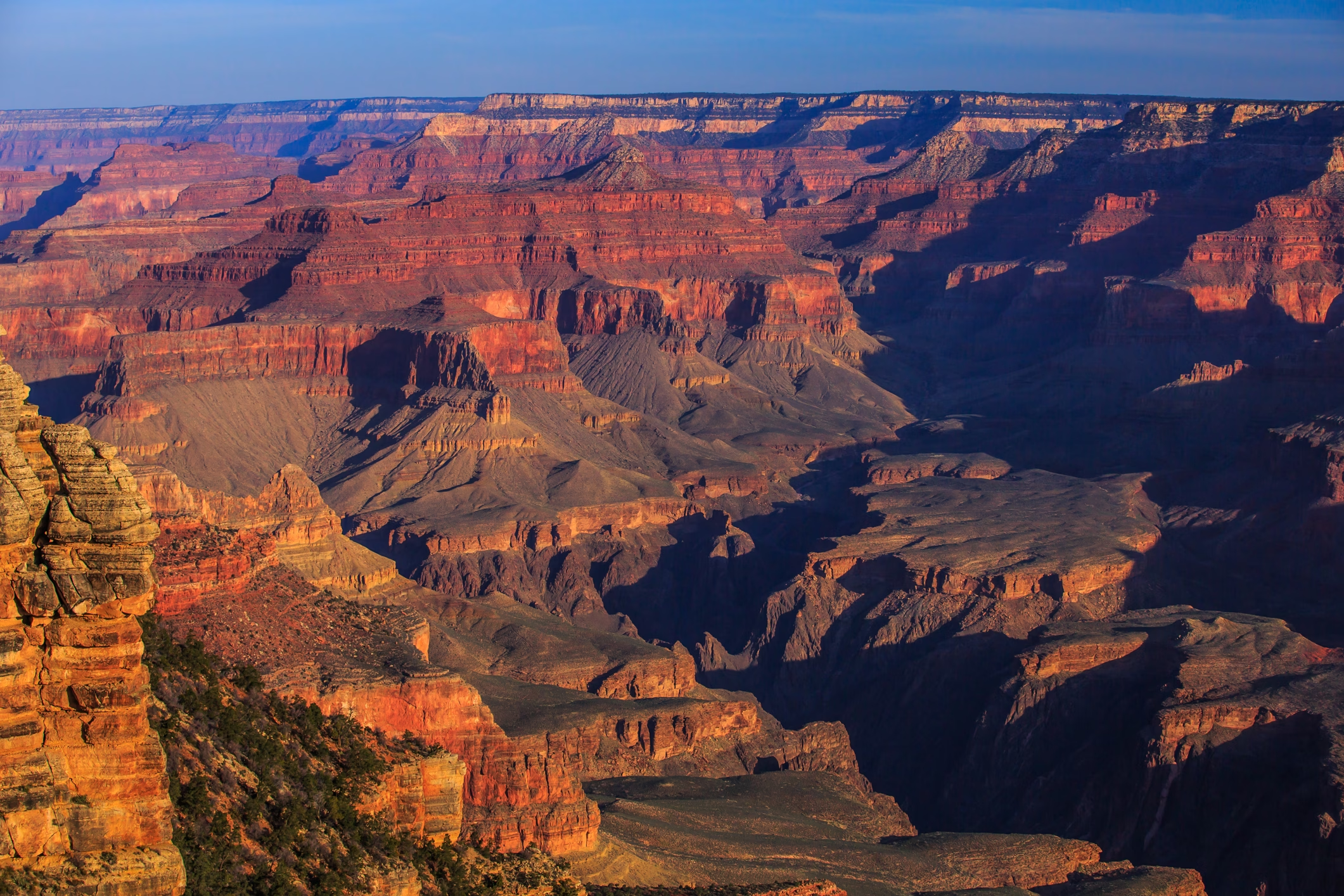
One of the most famous natural wonders on Earth is the Grand Canyon. Located in the southwestern United States, this massive canyon stretches for about 277 miles and reaches depths of more than a mile.
The canyon was formed over millions of years by the Colorado River, which slowly carved through layers of rock. These rock layers reveal nearly two billion years of Earth’s geological history.
The Grand Canyon is not only visually stunning but also scientifically valuable. Geologists study its rock formations to understand how landscapes evolve over time. Today, it attracts millions of visitors who come to hike, photograph, and experience its breathtaking views.
Mount Everest: The Roof of the World
The tallest mountain on Earth, Mount Everest, stands at an elevation of 8,848.86 meters above sea level. It is part of the majestic Himalayas and has fascinated explorers and climbers for decades.
Mount Everest was formed by the collision of the Indian and Eurasian tectonic plates, a process that continues to push the mountain higher each year. Its extreme altitude, freezing temperatures, and unpredictable weather make it one of the most challenging climbs in the world.
Despite the risks, thousands of adventurers attempt to reach its summit every year. For many climbers, standing on the top of Everest represents the ultimate human achievement.
The Great Barrier Reef: Nature’s Underwater Paradise
Located off the coast of Queensland, the Great Barrier Reef is the largest coral reef system on the planet. Stretching over 2,300 kilometers, it is so vast that it can even be seen from space.
The reef is home to an extraordinary range of marine life, including thousands of species of fish, coral, sea turtles, and sharks. It is one of the most diverse ecosystems in the world.
The formation of the Great Barrier Reef began around 20 million years ago when coral organisms slowly built limestone structures over time. Today, it plays a critical role in supporting marine biodiversity and protecting coastal regions.
However, the reef also faces environmental challenges, including climate change and coral bleaching, making conservation efforts extremely important.
Victoria Falls: The Smoke That Thunders
Victoria Falls is one of the largest and most powerful waterfalls on Earth. Located on the Zambezi River, this spectacular waterfall spans nearly 1,700 meters.
Local communities have long referred to the falls as “Mosi-oa-Tunya,” which means “The Smoke That Thunders.” The name comes from the massive clouds of mist created when water crashes down into the gorge below.
During peak water flow, the spray from Victoria Falls can rise hundreds of meters into the air and be seen from miles away. The thunderous roar of the falling water makes it one of the most dramatic natural sights in the world.
The Northern Lights: Nature’s Light Show
The Aurora Borealis, commonly known as the Northern Lights, is one of the most magical natural phenomena on Earth. These colorful lights appear in the night sky in regions close to the Arctic Circle, including parts of Norway, Iceland, and Canada.
The Northern Lights occur when charged particles from the sun collide with gases in the Earth’s atmosphere. This interaction produces glowing waves of green, purple, pink, and blue lights that move across the sky.
For centuries, ancient cultures believed these lights were spiritual or mystical signs. Today, scientists understand their physical cause, but the experience of witnessing them remains just as awe-inspiring.
The Amazon Rainforest: The Lungs of the Planet
The Amazon Rainforest is the largest rainforest in the world, covering millions of square kilometers across several South American countries. It is often referred to as the “lungs of the planet” because it produces a significant portion of the world’s oxygen.
The rainforest is home to an astonishing variety of plant and animal species, many of which are found nowhere else on Earth. Scientists estimate that millions of species may still remain undiscovered within its dense forests.
The Amazon River, which flows through the rainforest, is the largest river in the world by volume. Together, the river and forest create one of the most important ecosystems on the planet.
Protecting the Amazon is vital for maintaining global biodiversity and regulating the Earth’s climate.
Conclusion
Natural wonders remind us of the Earth’s incredible beauty and power. From towering mountains and vast rainforests to glowing skies and thunderous waterfalls, these remarkable places tell stories that span millions of years.
Locations such as the Grand Canyon, Mount Everest, the Great Barrier Reef, Victoria Falls, the Northern Lights, and the Amazon Rainforest highlight the diversity of landscapes that exist across the planet.
By appreciating and protecting these natural treasures, humanity can ensure that future generations will also have the opportunity to experience their beauty and learn from their remarkable histories.